
EN



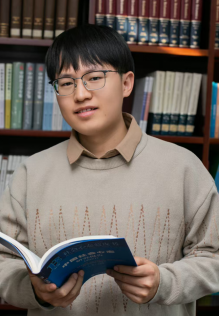
部门归属:社会心理学研究室
职务/职称:助理研究员
研究方向:聚焦社会心态与社会心理学,涉及发展心理学、网络心理学、传播学、人工智能使用与影响以及心理健康等交叉领域。
研究成果:已在《Journal of Child Psychology and Psychiatry》《Journal of Behavioral Addictions》《Journal of Affective Disorders》《心理学报》等国内外高水平期刊发表顶级、权威等论文25篇,累计被引800余次。多篇成果入选ESI全球前1%高被引论文、中国知网前1%高被引及高下载论文,曾获中国心理学会优秀论文奖,并被人大报刊复印资料转载。担任《Computers in Human Behavior》《Child Development》《Journal of Affective Disorders》《青年研究》《应用心理学》等20余种中外学术期刊审稿人。
【成果信息】
方向一:社会心态与社会心理学主题
1.Huang, S., Lei, H., Yang, Z., Lai, X., Wang, X., Zhang, C., & Wang, Y (2025). Competition between the positive characteristics system and the psychopathological system among adolescents: Less vulnerability or more scarring? Journal of Child Psychology and Psychiatry. (中科院一区Top,IF=7.0)
2.王俊秀,谭旭运,黄顺森 (2026). 当前我国民众社会心态特点与引导培育,载王俊秀主编《中国社会心态研究报告(2025)》,社会科学文献出版社。
3.黄顺森,中国民众奋斗价值观的现状及其对心理幸福的影响,载王俊秀主编《中国社会心态研究报告(2025)》,社会科学文献出版社。
方向二:发展心理学与心理健康主题
1.Huang, S., Lai, X., Wu., Y., Wang, Y (2026). Life course central depressive symptoms among the depressed Chinese: From adolescence to old age. Journal of Affective disorders. (JCR 一区, IF=4.9).
2.黄顺森,罗玉晗,来枭雄,简可雯,徐梓婧 & 王耘*.(2022).中国青少年抑郁的核心症状及性别、抑郁程度间的比较:基于网络分析方法. 心理科学(05),1115-1122. (AIM核心).
3.Lai, X., Nie, C., Huang, S., Li, Y., Xin, T., Zhang, C& Wang, Y*. (2022). Effect of Growth Mindset on Mental Health Two Years Later : The Role of Smartphone Use. International Journal of Environmental Research and Public Health, 19(6), 3355(JCR 一区,IF=4.614).
4.Xie, M., Huang, S., Ke, L., Wang, X., & Wang, Y*. (2022). The Development of Teacher Burnout and the Effects of Resource Factors : A Latent Transition Perspective. International Journal of Environmental Research and Public Health, 19(5), 2725(JCR 一区,IF=4.614).
方向三:网络心理学
(1)数字媒体使用议题
1.Huang, S.†(共一排第一), Lai, X.† , Li Y., Cui, Y., & Wang, Y. * (2023). Beyond screen time: The different longitudinal relations between adolescents’ smartphone use content and their mental health. Children. (JCR 二区,IF=2.4)
2.Huang, S., Lai, X., Zhao, X., Dai, X., Yao, Y., Zhang, C., & Wang, Y*. (2022). Beyond Screen Time : Exploring the Associations between Types of Smartphone Use Content and Adolescents’ Social Relationships. International Journal of Environmental Research and Public Health, 19(15), 8940.(JCR 一区,IF=4.614)
3.Lai, X., Nie, C., Huang, S., Yao, Y., Li, Y., Dai, X., & Wang, Y*. (2022). Classes of problematic smartphone use and information and communication technology (ICT) self-efficacy. Journal of Applied Developmental Psychology, 83, 101481.(JCR 二区,IF=3.0)
(2)数字成瘾议题
1.Huang, S., Lai, X., Li, Y., Wang, W., Zhao, X., Dai, X., Wang., H., Wang, Y*. (2023). Does parental media mediation make a difference for adolescents? Evidence from an empirical cohort study of parent-adolescent dyads. Heliyon, 9(4).(JCR一区,IF=3.4)
2.Huang, S., Lai, X., Li, Y., Dai, X., Wang, W., Li, J., Wang, H., Li, D and Wang ,Y*. (2022) Do the core symptoms play key roles in the development of problematic smartphone use symptoms. Frontiers in Psychiatry 13:959103.(JCR二区,IF=5.435)
3.Huang, S., Lai, X., Li, Y., Luo, Y., & Wang, Y*. (2021). Understanding juveniles’ problematic smartphone use and related influencing factors : A network perspective. Journal of Behavioral Addictions,10(3), 811-826. (JCR/中科院一区,IF=7.8)
4.Huang, S., Lai, X., Xue, Y., Zhang, C., & Wang, Y*. (2021). A network analysis of problematic smartphone use symptoms in a student sample. Journal of Behavioral Addictions, 9(4), 1032-1043.(JCR/中科院一区,IF=7.8)
5.Lai, X., Huang, S., Nie, C., Yan, J. J., Li, Y., Wang, Y., & Luo, Y*. (2022). Trajectory of problematic smartphone use among adolescents aged 10–18 years: The roles of childhood family environment and concurrent parent–child relationships. Journal of Behavioral Addictions, 11(010), 1–11.(JCR/中科院一区,IF=7.8)
6.Zhao, X., Lai, X., Huang, S., Li, Y., Dai, X., Wang, H., & Wang, Y. * (2024). Long-term protective effect of physical activity and self-control on problematic smartphone use in adolescents: A longitudinal mediation analysis. Mental health and Physical Activity, 26, 100585.(JCR二区,IF=2.3)
7.Dai, X., Wang, H., Lai, X., Huang, S., Zhao, X., & Wang, Y. (2026). Longitudinal Associations Between Materialism and Problematic Smartphone Use in Adolescence: Within- and Between-Person Effects. Behavioral Sciences, 16(1), 150.
8.来枭雄,黄顺森,张彩,唐斌,张美萱,朱成伟 & 王耘*.(2020).中小学生手机成瘾与人际关系主观幸福感和学校认同感的关联. 中国学校卫生(04),613-616. (CSSCI核心)
(3)数字压力与应对议题
1.黄顺森,来枭雄,张彩,赵心媚,代欣然,祁梦迪... & 王耘.(2024).青少年手机压力与心理健康的关系:基于多元宇宙样分析和密集追踪方法.心理学报(06),745-759 (AMI权威, IF=4.799).
2.Huang, S., Lai X., Ke, L, Qin, X., Yan, Julia, J., Xie, Y., Dai, X., Wang, Y*. (2022). Smartphone stress: concept, structure, and development of measurement among adolescents. Cyberspace: Journal of Psychosocial Research on Cyberspace, 16(5), Article 1.(JCR二区,IF=3.7)
3.Huang, S., Lai, X., Wolfers, L., Li, Y., Dai, X., Zhao, X., Wu, H., Song, S., Wang, H., He, Y., & Wang, Y. * (2024). Online stress and offline stress: Uniqueness, differences, and cumulative effect on multiple well-being. Cyberspace: Journal of Psychosocial Research on Cyberspace, 18(2), Article 3. (JCR一区,IF=3.3)
4.Huang, S., Lai X., Ke, L., Qin, X, Yan, Julia, J., Xie, Y., Dai, X., Wang, Y*. (2023). Coping styles among Chinese adolescents: The development and validation of a smartphone coping style scale. Journal of Children and Media, 17(4), 488-505.(JCR二区,IF=3.3)
方向四:人工智能使用及其影响议题
1.Huang, S., Lai, X., Ke, L., Li, Y., Zhao, X., Dai, X., Wang, H., Wang, Y*. (2024). AI technology panic—Is AI dependency really bad for mental health? A cross-lagged panel model and the mediation roles of AI use motivations among adolescents. Psychology Research and Behavior Management, 17, 1087-1102.(JCR 一区,IF=2.8)
2.Wang, H., Lai, X., Huang, S., Dai, X., Zhao, X., & Wang, Y. (2026). The Influence of Prior Perception, Attitude, and Immediate Knowledge of AI on Adolescents’ Preferences for High- and Low-Replaceable Jobs. Behavioral Sciences, 16(1), 72. (JCR二区,IF=2.5).
3.黄顺森,来枭雄,王欢蕾,黎亚军,张彩,赵心媚,代欣然,王耘*. (2023). 儿童青少年人工智能使用状况及其与人工智能依赖的关系. 第二十四届全国心理学学术会议摘要集(口头报告).
方向五:社会科学方法类议题:
1.黄顺森,陈豪杰,来枭雄,代欣然 & 王耘*.(2023).多元宇宙样分析:简介及应用. 心理科学进展(02),196-208.(AMI 核心)
2.Huang, S., Zhao X., Lai, X., Dai, X., Wang, H., Wang, Y*. (2023). Multiverse-style analysis: Current bibliometric analysis and tutorial. The Annual Meeting of the International Society for Data Science and Analytics (ISDSA). Shanghai. (会议口头报告)


Copyright©Institute of Sociology, Chinese Academy of Social Sciences
中国社会科学院社会学研究所版权所有
地址:北京市东城区建国门内大街5号