
EN



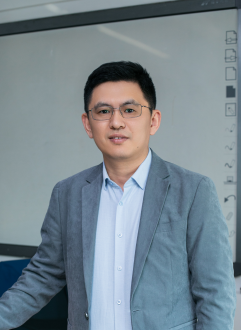
姓名:谭旭运
部门归属:社会心理学研究室
职务/职称:研究室副主任/副研究员
研究方向:社会心态
研究成果:
(一)专著:
1.谭旭运、刘力,2022,《腐败问题的社会心理学研究》,中国方正出版社
2.谭旭运,2020,《获得感:一种社会心理分析》,社会科学文献出版社
(二)学术论文:
谭旭运、王俊秀、董洪杰,2025,《中国式现代化进程中的社会心态研究:理论体系深化拓展与治理应用创新(代卷首语)》,《中国社会心理学评论》第28辑
谭旭运、刘娅萱、古勤加,2025,《善意何以难成善行?社会心态视角下慈善意愿与行为分化的机制探索》,《中国社会心理学评论》第28辑
谭旭运、韦庆旺、王清源,2024,《现代化目标下社会变迁过程与社会心理演变的互动(代卷首语)》,《中国社会心理学评论》第27辑
谭旭运、吕邈, 2023,《青年人社会流动感知与获得感》,《青年研究》第2期,《社会科学文摘》第7期。
谭旭运,2021,《获得感与美好生活需要的关系研究》,《江苏社会科学》第3期。
谭旭运、董洪杰、张跃、王俊秀,2020,《获得感的概念内涵、结构及其对生活满意度的影响》,《社会学研究》第5期,《高等学校文科学术文摘》第6期。
谭旭运、豆雪姣、董洪杰,2020,《社会阶层视角下民众获得感现状与提升对策》,《广西师范大学学报(哲学社会科学版)》第5期。
谭旭运、豆雪姣、董洪杰、张跃,2019,《主观阶层、流动感知与社会参与意愿——基于网络调查的实证研究》,《社会发展研究》第6期。
谭旭运、张若玉、董洪杰、王俊秀,2018,《青年人获得感现状及其影响因素》,《中国青年研究》第10期。
谭旭运、杨昭宁、顾子贝,2017,《传统与现代双文化自我构念的代际研究》,《青年研究》第2期。
谭旭运,2016,主客观社会地位对社会信任心态的影响.,《哈尔滨工业大学学报(社会科学版)》第4期。
谭旭运、屈青青,2016,爱情心理学的四大理论建构集成——兼评《爱情心理学(最新版)》,《心理研究,》第2期。
谭旭运、杨昭宁、杨静、吕邈,2011,《大学生传统与现代双文化自我解读》,《心理研究》第5期。
刘娅萱、谭旭运、王清源等,2024,《变迁时代民众慈善意愿特征及宏微观影响因素分析》,《中国社会心理学评论》第27辑。
张跃、王俊秀、谭旭运,2024,《未来可期:社会预期的功能及其影响机制》,《江苏行政学院学报》第6期。
韦庆旺、谭旭运,2024《经济发展与文化传统的角力:社会变迁心理学研究中被忽视的理论命题(代卷首语)》,《中国社会心理学评论》第26辑。
葛国宏、谭旭运,2024,《“去腐生肌”:我国民众腐败感知变迁(2013—2022)的横断历史元分析》,《中国社会心理学评论》第26辑。
井世洁、谭旭运,2024,《中国社会心态研究的推进历程与未来展望——基于CiteSpace的文献计量学分析》,《治理现代化研究》第1期。
董洪杰、谭旭运、豆雪姣、王俊秀,2019,《中国人获得感的结构研究》,《心理学探新》第5期。
豆雪姣、谭旭运、杨昭宁,2019,《居住流动性对青年社会参与意愿的影响》,《心理技术与应用》第3期。
李永帅、黄桢炜、谭旭运、刘力,2017,《互联网数据中的文化差异与文化变迁》,《心理科学进展》第6期。
杨昭宁、顾子贝、王杜娟、谭旭运、王晓明,2017,《愤怒和悲伤情绪对助人决策的影响:人际责任归因的作用》,《心理学报》第3期。
史媛媛、佐斌、谭旭运、刘力,2016,《来华留学生中国人刻板印象研究》,《青年研究》第5期。
顾子贝、杨昭宁、代亚男、谭旭运、王晓明,2016,《背景颜色对中性面孔情绪识别的影响:隐喻的视角》,《心理科学》第3期。
黄桢炜、刘力、谭旭运、郑雯雯、张冀琦,2014,《集体主义与贿赂》,《心理科学进展》第12期。
杨昭宁、杨静、谭旭运,2012,《聋生安全感, 人际信任与心理健康的关系研究》,《中国特殊教育》第9期。
杨昭宁、禹钰、谭旭运,2012,《情绪对成就动机与风险决策关系的调节效应》,《应用心理学》第2期。
杨昭宁、付大坤、谭旭运,2011,《大学生成人依恋, 元情绪与成就动机的关系》,《中国特殊教育》第10期。
Tan, X., Lv, M., Fan, L., Liang, Y., & Liu, J. (2023). What alleviates depression among medical workers in emergency risk events? The function of subjective social status. Heliyon, 9(3), e13762
Tan, X., Zhang, Y., Liu, L, Dou, X., Gu, Z., Liang, Y., & Dang, J. (2021). Turning a blind eye: Meritocracy moderates the impacts of social status on corruption perception. International Journal of Psychology, 56, 688-697.
Tan, X., Dou, X., Zhang, Y., Xing, C., Bai, B., & Miao, R. (2021). The Structural Dilemma of Citizen Participation: The Interactive Influence of Social Status and Subjective Social Mobility. Journal of Pacific Rim Psychology, 15, 1-10.
Tan, X., Liu, L., Huang, Z., & Zheng, W. (2017). Working for the hierarchical system: the role of meritocratic ideology in the endorsement of corruption. Political Psychology, 38(3), 469-479.
Tan, X., Liu, L., Huang, Z., Zheng, W., & Liang, Y. (2016). The effects of general system justification on corruption perception and intent. Frontiers in Psychology, 7(e97075).
Tan, X., Li, L., Zheng, W., & Huang, Z. (2016). Effects of social dominance orientation and right-wing authoritarianism on corrupt intention: the role of moral outrage. International Journal of Psychology, 51(3), 213-219.
Tan, X., Liu, L., Huang, Z., Zhao, X., & Zheng, W. (2016). The dampening effect of social dominance orientation on awareness of corruption: moral outrage as a mediator. Social Indicators Research, 125(1), 89-102.
Li, Y., Tan, X., Huang, Z. and Liu, L. (2019). Relationship between collectivism and corruption in American and Chinese books: A historical perspective. International Journal of Psychology, 54, 180-187.
Liang, Y., Huang, L., Liu, L., Tan, X., & Ren, D. (2025). Impacts of Unethical Behavior on Self-Esteem: A Contingent Dual-Process Model. Personality and Social Psychology Bulletin, 51(10), 1897-1910.
Wei, L., English, A. S., Talhelm, T., Zhang, Y., Tan, X., Zhu, J., & Wang, J. (2025). People in relationally mobile cultures report higher well-being. Emotion, 25(3), 541–555.
Wei, C., Dang, J*., Liu, L.*, Li, C., Tan, X., & Gu, Z. (2023). Economic inequality breeds corrupt behaviour. British Journal of Social Psychology, 62(2), 949-971.
Liang, Y., Tan, X., Dang, J., Wei, C., Gu, Z., & Liu, L. (2021). Does competence or morality mainly drive self-esteem? It depends on general system justification. Journal of Experimental Social Psychology, 97, Article 104207.
Liang, Y., Liu, L.*, Tan, X., Dang, J., Li, C., & Gu, Z. (2020). The moderating effect of general system justification on the relationship between unethical behavior and self-esteem. Self and Identity, 19, 140–163.
Bai, B., Tan, X., Zhang, N., & Yang, Y. (2020). Social Dominance Orientation and Selfish Behaviors in Chinese Adolescents: the Mediating Role of Psychological Entitlement. Child Indicators Research,13, 981-991.
Gu, Z., Liu, L., Tan, X., Liang, Y., Dang, J., Wei, C., Ren, D., Su, Q. and Wang, G. (2020), Does power corrupt? The moderating effect of status. International Journal of Psychology, 55, 499-508
Ren, D., Tan, X., Dang, J., Liu, L., Zhao, X., Li, C., ... & Wei, C. (2019). Open or close the door to the outgroup? Diversity beliefs moderate the impact of group boundary permeability on attitudes toward the outgroup. International Journal of Psychology, 54(6), 712-721.
Chen O.,Yang Z., Tan X., Gu Z., and Chen J. (2019). Powerful postures do not lead to risky behaviors. Journal of Pacific Rim Psychology, 13, e23.
Wang G, Liu L, Tan X, et al. (2017). The moderating effect of dispositional mindfulness on the relationship between materialism and mental health. Personality & Individual Differences, 107, 131-136.
Zheng, W. W., Liu, L., Huang, Z. W., & Tan, X. Y. (2017). Life satisfaction as a buffer of the relationship between corruption perception and political participation. Social Indicators Research, 132(2),907-923.
Huang, Z. W., Zheng W. W., Tan, X. Y., & Liu, L. (2016). Polluted air increases perceived corruption. Journal of Pacific Rim Psychology, 10, E13.
Liang Y, Liu L, Tan X, Huang Z, Dang J, & Zheng W. (2016). The effect of self-esteem on corrupt intention: the mediating role of materialism. Frontiers in Psychology, 7(e0123859).
Huang, Z. W., Liu, L., Zheng, W. W., Tan, X. Y., & Zhao, X. (2015). Walking the straight and narrow: the moderating effect of evaluation apprehension on the relationship between collectivism and corruption. Plos One, 10(3): e0123859.
Yang, X. L., Liu, L., Shi, Y. Y., Li, Y. S., Tan, X., & Hu, X. M., et al. (2015). The relationship between cultural anxiety and ethnic essentialism: the mediating role of an endorsement of multicultural ideology. Plos One, 10(11), e0141875.
Sun, Q., Lou, L., Lu, J., Wang, X., Zhong, J., & Tan, X., et al. (2016). Resource availability hypothesis: perceived financial and caloric status affect individuals' height preferences for potential partners. International Journal of Psychology, 51(5), 340-347.
(三)承担课题:
1.共同富裕目标下的社会心态特征与演变趋势,国家社会科学基金重点项目,项目编号23ASH004(2023-2027)
2.人类命运共同体理念的文化心理根基与践行路径,中国社会科学院重大创新项目,项目编号2023YZD050 (2023-2026)
3.鄂尔多斯精神文明建设与社会心态培育的实践与对策,鄂尔多斯市委宣传部 (2025)
4.成都特色的幸福感理论阐释与指标体系构建研究,成都市社会科学院成都研究院(2023-2024)
5.新时代廉洁心态的特点、动因与引导,中国社会科学院中国共产党巡视理论研究中心,项目编号:XSZX2024005(2023-2024)
6.新晋江人城市融入与社会心态状况与对策研究,晋江市社会科学界联合会(2023-2024)
7.新冠肺炎疫情对国民社会心态的影响,教育部哲学社会科学重大课题攻关项目(子课题一),项目编号:21JZD038(2021-2024)
8.中国民众获得感提升的影响因素研究,中国社会科学院青年科研启动项目。项目编号:2020YQNQD0098(2020-2021)
9.积极社会心态培育视域下民众获得感影响机制与对策研究. 2017年贵阳孔学堂阳明心学与当代社会心态研究院课题,项目编号:KXTXT201703(2018-2019)
10.社会心态视角下主观社会阶层对公众参与的影响与机制研究,国家社会科学基金青年项目,项目编号:17CSH040(2017-2020)
11.系统公正化信念对腐败的影响及机制:社会心态的视角,中国博士后科学基金面上项目,项目编号:2015M581258(2016-2017)
电子邮箱:tanxuyun@cass.org.cn


Copyright©Institute of Sociology, Chinese Academy of Social Sciences
中国社会科学院社会学研究所版权所有
地址:北京市东城区建国门内大街5号